
Build a Profitable Hybrid Event Marketing Plan
Estimated reading time:
1 minute
According to a study by Bizzabo, 97% of marketing professionals are betting big on hybrid events in the future. However, promoting a single event that delivers two distinct audience experiences is still a challenge.
We’ve seen countless talented organizers pour their hearts (and budgets) into hybrid events, only to watch virtual attendees drop off or in-person guests feel disconnected.
If unprecedented ROI, global reach, and lasting impact are what you are looking for with your next hybrid event, you need two things.
- A change in perspective. Look at hybrid events as a revenue multiplier rather than just an attendance booster. Start thinking about how you can use the format to create premium experiences while also scaling attendance.
- Try out the battle-tested strategies we’ve listed below to create a profitable hybrid event marketing plan. This covers audience segmentation, ticket pricing strategies, engagement tactics, and much more.
Ready? Here’s how hybrid event marketing is done right.
1. Understand target personas for both audiences
Hybrid events cater to two distinct groups: in-person attendees and virtual participants. Understanding their motivations, behaviors, and expectations is important for creating targeted marketing messages that resonate with each audience.
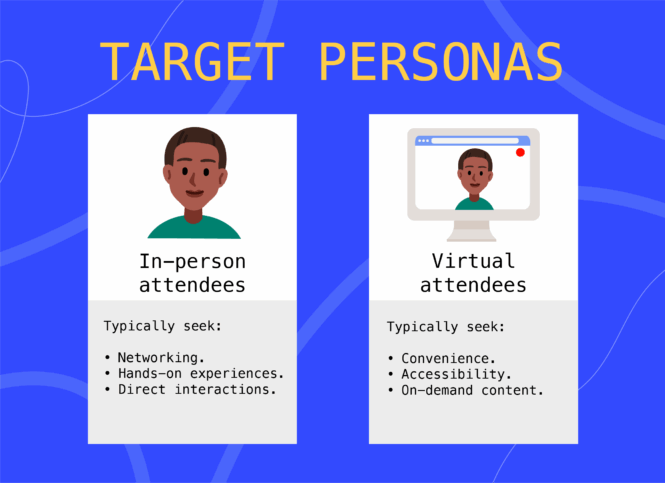
An effective marketing strategy begins with identifying and addressing each audience’s specific needs.
In-person attendees typically seek:
- Networking opportunities.
- Hands-on experiences.
- Direct interactions with speakers and exhibitors.
They value the energy of a live environment and often justify higher ticket prices for these benefits.
Virtual attendees prioritize:
- Convenience.
- Accessibility.
- On-demand content.
They appreciate the ability to participate without travel costs or time commitments while still gaining valuable information.
To develop effective marketing messages, use past event data, conduct surveys, and analyze social media insights to understand what each audience values most. Create detailed audience personas based on demographics, industry roles, and engagement preferences to guide your marketing efforts.
2. Set different expectations for both types of attendees
Clear communication across all event touchpoints prevents confusion and improves attendee satisfaction. When participants receive the experience they anticipated, engagement levels naturally increase.
Ensure the hybrid nature of your event is highlighted in:
- Event website and landing page: Clearly state that attendees can choose between in-person and virtual participation, with specific details about what each experience includes.
- Email invitations and social media promotions: Consistently reinforce the hybrid format to attract both audience types.
- Registration forms: Include a mandatory field where attendees select their preferred participation mode to help with planning and personalized follow-up.
Using consistent language and visual cues (such as color-coded icons for in-person vs. virtual components) helps clarify the event format and set proper expectations.
Be specific about what each group will receive:
- In-person attendees will have venue access, face-to-face networking, physical exhibition booths, live Q&As, and hands-on workshops.
- Virtual attendees get access to livestreams, interactive chat functions, virtual networking rooms, on-demand content access, and digital resources.
Address common questions proactively:
- Will virtual attendees have access to all sessions?
- How will networking work for remote participants?
- Will in-person attendees also have digital access to event materials?
Create a comprehensive FAQ section on your event website to reduce uncertainty and set clear expectations for both audience types.
3. Create a flexible agenda
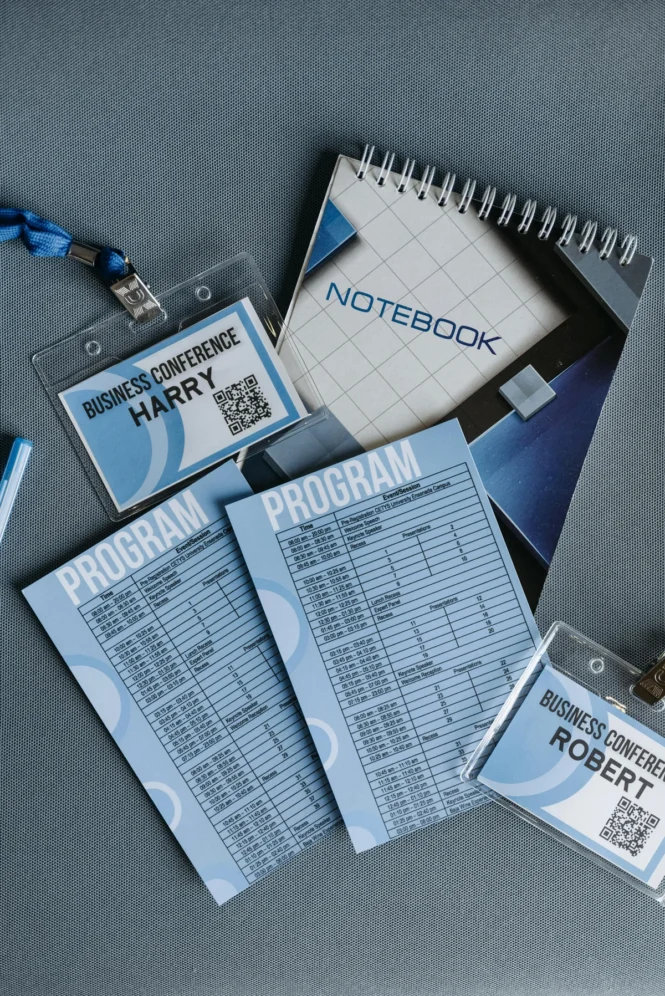
A well-structured, adaptable agenda ensures both audience groups can fully participate without logistical conflicts. Flexibility improves virtual engagement, accommodates time zone differences, and maximizes the reach of event content.
When creating a hybrid event agenda, consider:
- Session duration: Virtual attendees typically engage better with shorter, focused sessions (30–45 minutes), while in-person attendees might prefer deeper dives (60–90 minutes).
- Daily session limits: Avoid digital fatigue by balancing educational sessions with networking opportunities and breaks.
- Parallel tracks: Consider offering some separate sessions for in-person and virtual attendees alongside shared keynotes and main events.
Timing is crucial for hybrid events with global reach, so schedule key sessions during times that work for your primary audience regions. Offer important sessions more than once to accommodate different time zones and provide on-demand access for virtual attendees who cannot attend live sessions.
Make recorded sessions available for later viewing to extend the life of your content and increase its value. Include interactive components throughout your agenda, such as live polls, Q&A sessions, or virtual breakout rooms, to maintain engagement from both audience types.
Consider using a mix of live and pre-recorded content to balance real-time engagement with production quality and flexibility.
4. Choose the right event management platform
Hybrid events require a robust platform that supports both in-person and virtual experiences. The right technology ensures smooth event management, enhances engagement, and simplifies logistics like registration, streaming, networking, and analytics.
Event organizers have two main options: using a dedicated event management platform or setting up their own hybrid event website.
Option 1: Using an event management platform
How it works: All-in-one event management platforms handle registration, live streaming, attendee engagement, analytics, and more.
|
Pros |
Cons |
|---|---|
|
|
Recommended event management platforms:
- Cvent is a comprehensive hybrid event solution with strong registration, networking, and analytics features.
- SpotMe focuses on audience engagement with interactive tools for both in-person and virtual attendees.
- Bizzabo is great for large-scale hybrid events with strong branding and customization options.
- RingCentral Events (formerly Hopin) is known for its rich virtual networking and audience interaction features.
For virtual streaming components, consider platforms like StreamYard, which offers professional broadcasting capabilities that integrate with major streaming services.
Option 2: Setting up a self-hosted hybrid event website
How it works: Instead of using a third-party platform, organizers create their own hybrid event website.
|
Pros |
Cons |
|---|---|
|
|
Recommended self-hosted solution: WordPress + The Events Calendar Suite
This combination of calendar, ticketing, seating, and marketing management tools creates a powerful foundation for hybrid event websites.
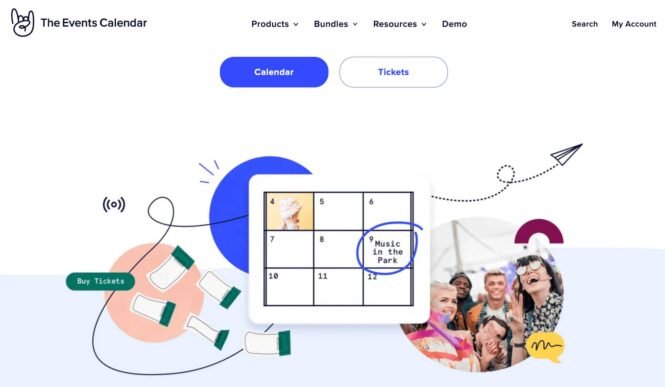
The Events Calendar Suite supports event registration and ticketing while allowing for virtual session scheduling through integrations with video platforms. The extensive customization options let you match your brand identity and event goals perfectly.
5. Build an impactful event landing page
Your event landing page serves as the central hub for all event information and registration. It plays a key role in driving conversions by providing clear details and compelling reasons to attend. For hybrid events, this page must highlight the value of both in-person and virtual participation.
The page should immediately communicate that your event offers both live and virtual attendance options. Use messaging that highlights the benefits of each format.
Include these essential event details, such as:
- Event date, time, and location (for in-person attendees).
- Speaker lineup with photos and brief bios.
- Session highlights and agenda preview.
- Ticket pricing for both attendance types.
- Sponsors and partners to add credibility.
- Testimonials from past attendees to build trust.
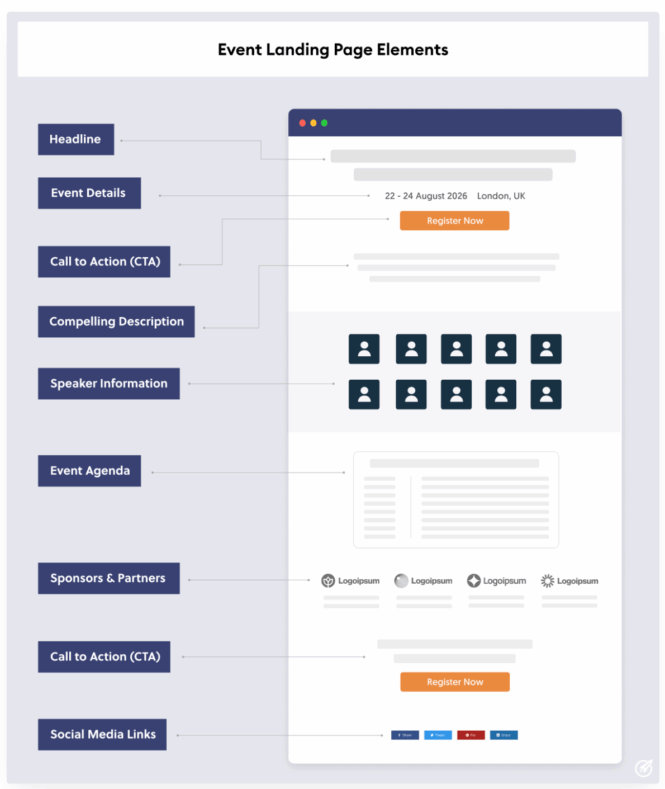
Use engaging visuals and media, including high-quality images and speaker headshots, event teaser videos showing both in-person and virtual components, past event highlights demonstrating successful hybrid execution, and consistent branding and colors for visual appeal.
Ensure your landing page is mobile-friendly with responsive design, quick to load on all devices, accessible with clear fonts and good contrast, and easy to navigate with an intuitive layout.
Make sure to optimize your landing page for SEO and conversions. Here are some tips:
- Use relevant keywords related to your event, industry, and location.
- Include a clear, compelling call-to-action (CTA) like “Reserve Your Spot Now”.
- Simplify the registration process by asking only for essential information.
- Create separate registration paths for in-person and virtual attendees.
6. Create different ticket pricing strategies for live and virtual attendees
Hybrid events need tailored ticket pricing because the perceived value differs between virtual and live attendees. A structured pricing strategy ensures fair value for both experiences, encourages higher attendance, boosts revenue, and allows for targeted promotions.
Offer multiple ticket categories to accommodate different budgets and needs. For example, you could have:
- In-person standard tickets with full access to venue sessions, networking, and workshops.
- In-person VIP tickets that include everything in standard tickets plus exclusive meet-and-greets, premium seating, and special perks.
- Virtual basic tickets offering access to livestreamed keynotes and select sessions.
- Virtual premium tickets that have the basic features plus interactive Q&As, virtual networking rooms, and on-demand access for 30–90 days.
Encourage upgrades by clearly highlighting the additional value of higher-tier tickets, such as exclusive content, extended access periods, or premium networking opportunities.
You can also implement pricing incentives to maximize registrations, such as:
- Early-bird discounts (15–25% off) with clear deadlines to drive early commitment.
- Group discounts for teams of 3+ to encourage company-wide participation.
- Bundle packages combining in-person and virtual access for flexible attendance.
- Loyalty rewards, offering returning attendees special rates.
For WordPress-based event sites, Event Tickets Plus provides great functionality for creating multiple ticket types, managing registrations, and tracking sales. The plugin makes it super easy to implement tiered pricing and special offers while keeping everything organized.
Last but not least, set up integrated payment gateways and automated pricing rules to streamline ticket sales.
7. Have a virtual-first marketing strategy
A virtual-first marketing approach is necessary for hybrid events because they rely heavily on digital promotion to reach a broad audience. This strategy ensures that online attendees feel as valued as in-person participants while allowing for scalable outreach, personalized engagement, and measurable success.
To create a successful digital-first marketing campaign, use multiple channels:
- Social media: Build awareness and generate buzz through regular posts highlighting speakers, sessions, and engagement opportunities.
- Email marketing: Nurture leads with value-focused content and send timely reminders as the event approaches.
- Content marketing: Publish blog posts, guest articles, and video teasers that showcase event topics and speakers.
- Paid ads: Target specific audience segments with tailored messaging to boost conversions.
Ensure all promotional messaging clearly communicates hybrid attendance options and their respective benefits. Use urgency-driven CTAs like “Limited virtual seats available” or “Early-bird pricing ends Friday” to encourage prompt sign-ups.
Identify the best social channels for event promotion
Not all social channels yield the same results. Select platforms based on your event’s industry and audience.
For instance, LinkedIn is best for B2B events and professional networking to share speaker announcements, industry insights, and thought leadership content. Twitter/X is great for industry discussions and real-time engagement. Create event hashtags and participate in relevant conversations. Instagram & TikTok are ideal for visual promotions and influencer partnerships. Share behind-the-scenes content and short-form video content for better engagement.
Apart from these, email remains one of the most effective and personalized event promotion tools. Use a solution like Promoter, by The Events Calendar, for WordPress-based event websites to automate event reminders and follow-ups, segment lists to personalize outreach, and track open rates and conversions for optimization.
Connect with influencers in your space for better marketing reach
When was the last time you tried something new because your Insta role model recommended it? Quite recently, we bet!
A study by Matter Communications shows that 81% of people are ready to buy a product if an influencer recommends it to them. With their massive fan followings, influencers have the power to hype up your event and make new audiences trust you, even if they might have never heard of you before.
Some ways to collaborate with influencers include:
- Identify influencers whose audience matches your target attendees.
- Offer exclusive perks like free access, VIP experiences, or paid partnerships.
- Have them share event teasers and personal invitations.
- Arrange for them to host sessions or interviews with key speakers.
- Request testimonials or endorsements to build credibility.
8. Maximize engagement across both experiences
The success of hybrid events hinges on meaningful engagement between virtual and in-person participants. Remote attendees, in particular, need compelling reasons to stay actively involved throughout the event. Strategic planning and thoughtful execution can transform passive viewers into active participants, regardless of their location.

Use technology as the great connector. Add interactive polls and real-time chat features to keep virtual attendees connected to the main event, and have dedicated livestreaming setups for continued audio-visual communication between both audiences. Select tools that enhance rather than complicate the attendee experience.
Build a vibrant community. The most successful hybrid events extend beyond the scheduled programming. Consider creating dedicated digital spaces where connections can flourish:
- Launch event-specific communities on Slack or Discord.
- Maintain active social media presence with targeted hashtags.
- Implement recognition programs celebrating engaged participants.
Offer incentives to boost participation. Digital badges, leaderboard rankings, and exclusive content rewards create healthy competition while encouraging meaningful interaction. However, don’t go overboard with the gamification. These elements should complement the event’s core objectives rather than overshadow them.
Create meaningful cross-audience connections
Mixed-format activities that bring both audiences together can be a core attraction for hybrid events. Virtual breakout rooms, joint workshops, and buddy systems that pair live and virtual attendees based on common interests are some ways of doing this.
Design collaborative challenges that require input from both audience types, leading to natural interaction and knowledge sharing.
You can set up regular touchpoints throughout the event to help maintain engagement and create opportunities for spontaneous connections, much like the chance encounters that make traditional events so valuable.
9. Offer dedicated support to virtual attendees
When virtual attendees encounter problems, every minute spent troubleshooting is a minute of lost engagement. Without dedicated support, connectivity problems, platform difficulties, or unclear navigation can lead to frustration and drop-offs.
At the heart of your virtual support strategy should be a cross-functional team ready to tackle any challenge. Virtual event hosts can serve as the friendly faces welcoming online attendees, while dedicated technical specialists stand ready to resolve streaming, login, and connectivity issues. Behind the scenes, experienced moderators can keep discussions flowing in chats and Q&As, ensuring no question goes unanswered.
Think of offering proactive support before the event. Prevention is always better than cure. In the days leading up to your event, share these resources with your attendees.
- Pre-event guides with clear instructions on accessing sessions.
- Troubleshooting tips for common technical issues.
- Support contact information and available hours.
- Platform orientation sessions to familiarize attendees with features.
During the event, set up a live help desk to provide immediate assistance for urgent issues, and a dedicated support chat channel to offer quick solutions for simpler questions. Check in regularly to identify potential issues before they become problems.
Having an FAQ section with step-by-step solutions for common problems like login errors, audio issues, and session navigation is also a good idea.
10. Leverage post-event marketing for continued engagement
The event may be over, but your relationship with attendees shouldn’t end there. Effective post-event marketing helps maintain interest, build long-term connections, and nurture future event attendance.
Start by creating a content package that includes session recordings, which can be particularly valuable for those who missed live sessions. Transform key moments into engaging highlight reels that capture the event’s energy and essential insights. This content serves as a valuable resource for attendees and is powerful marketing material for future events.
Gather feedback to improve future events. Send short, targeted surveys about session value, technical experience, and overall satisfaction. Ask specific questions about what worked well and what could be improved, and offer incentives like discounts on future events to encourage higher response rates.
Keep the momentum going with thoughtful follow-up communication. Send personalized thank-you messages that include:
- Key event takeaways and memorable moments.
- Links to recorded sessions and additional resources.
- Invitations to join ongoing community discussions.
Finally, maintain engagement by introducing upcoming opportunities, whether they’re webinars, networking events, or early registration for your next major gathering.
Start planning your hybrid event marketing strategy today
Hybrid events present both challenges and opportunities. Now is the time to refine your marketing strategy using the approaches outlined in this article to maximize attendance, optimize engagement, and create a memorable experience.
Experiment with different hybrid event platforms, marketing tactics, engagement tools, and content formats to discover what resonates best with your audience. And if you need a WordPress event toolkit to get started, The Events Calendar suite is here to create and market hybrid events that drive results.
For more tips on how to build profitable hybrid events, sign up for our newsletter!

Nathan
View author page