
Fundraising Ticketing Strategies for Nonprofits
Estimated reading time:
1 minute
Are you putting your heart and soul into planning nonprofit events but still struggling to meet your fundraising goals? We see you. Every year, dedicated nonprofit professionals and volunteers work tirelessly to create meaningful events, yet many face the same challenging question: “How do we sell more tickets?”
That’s what we’re here to help you answer!
In this guide, we’re sharing ten proven ticketing strategies that will help you boost your fundraising success. Whether you’re organizing a charity gala, a community fun run, or a benefit concert, these tips will show you how to:
- Sell more tickets and reach your fundraising targets.
- Save time and energy with smarter ticketing processes.
- Attract more donors and supporters to your events.
You already have the passion and dedication to make a difference in your community. Let’s add some powerful ticketing techniques to your toolkit.
Nonprofit marketing strategies to maximize ticket sales
Getting your event noticed is just as important as planning it. Besides selling tickets, smart non-profit marketing strategies create buzz, connect with donors, and spread the word about your cause. And when you combine the right marketing approach with effective ticketing tactics, you build a community of supporters who believe in your mission.
1. Maximize donations through diversified pricing options and ticket types
Think of your ticket pricing like a menu at a restaurant — the more options you offer, the more likely everyone will find something that suits their taste and budget. This strategy is about making your event accessible while maximizing donations from those who can give more.
Let’s look at an example of a typical tiered pricing structure that’s popular at many fundraisers:
- General Admission: $50 (Perfect for new supporters).
- Premium Seating: $150 (Added perks like preferred seating).
- VIP Experience: $500 (Exclusive benefits like meet-and-greets).
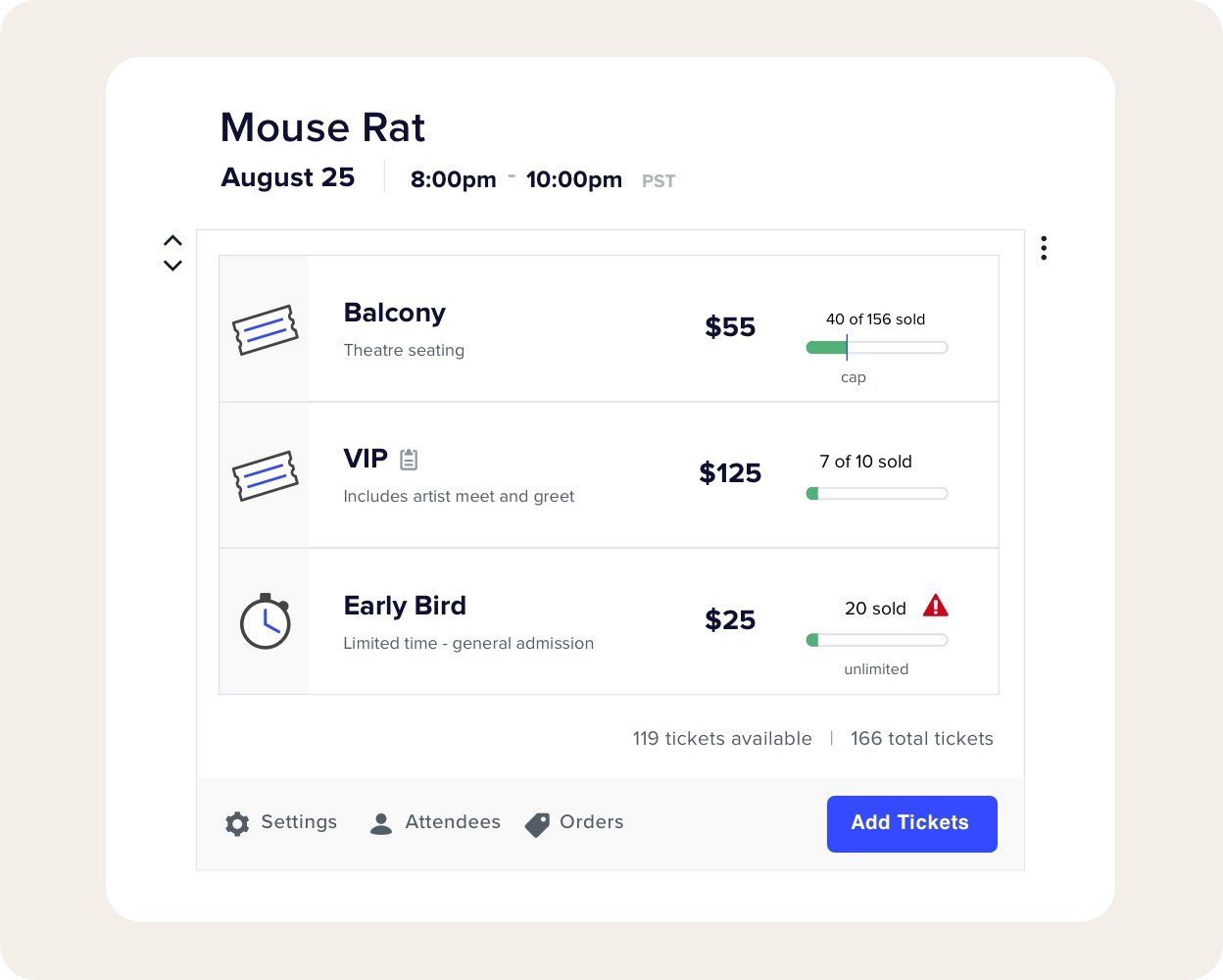
You can use smart promotional strategies to sell these tickets, such as:
- Early-bird specials: “Save $20 when you purchase by [date]”.
- Group deals: “Buy 5 tickets, get 1 free”.
- BOGO offers: Buy-one-get-one tickets that can appeal to first-time attendees.
- Tax benefits: Mentioning the advantage of buying your ticket, such as “$250 of your VIP ticket is tax-deductible,” can motivate higher-end ticket sales.
The key is to clearly communicate the value at each price point. When donors understand what they’re getting as compared to what they are giving, they’re more likely to choose higher-tier options.
We’ll dive deeper into specific ticket types and ticketing platforms later, but remember that diversified pricing is your foundation for fundraising success. That way, you create opportunities for everyone to support your cause in a way that works for them.
2. Create premium experiences with pre-event activities
Successful nonprofit events are about creating an unforgettable journey for attendees that begins long before the actual day.
You could create digital scavenger hunts with clues about the upcoming event or launch a “Change Makers Spotlight” series to inspire your potential attendees. Another great idea is to share behind-the-scenes content on your socials or offer exclusive sneak peeks post-registration to make the attendees feel valued.
The beauty of these pre-event experiences is that they transform your event from a single day into an exciting journey. When supporters feel like they’re part of something special from the start, they become your most passionate advocates, naturally drawing others into your cause’s story.
Additionally, you can track which pre-event activities generate the most excitement and engagement. This insight will help you refine your approach for future events, creating an ever-stronger community of dedicated supporters.
3. Leverage community partnerships for social promotion
When it comes to promoting your nonprofit event, you need to join forces with local businesses and team up with local influencers to create a powerful network that amplifies your message and drives ticket sales.
Think about it: every local business, influencer, and corporate partner has their own unique audience. When they share your event, you can reach people who already trust their recommendations and are, hence, much more likely to attend!
Here are some ways to increase your social influence while staying committed to your vision:
- Connect with community leaders who align with your mission.
- Invite local social media stars to document their event experience.
- Feature well-known supporters in a “Why I’m Going” video series.
- Create Instagram-worthy photo opportunities with local artists.
If your influencers ask what’s in it for them, you could:
- Offer tiered sponsorship packages with unique branding opportunities.
- Create exclusive VIP lounges branded by premium sponsors.
- Design social media filters featuring sponsor logos.
- Give sponsors first access to next year’s event opportunities.
- Promote friendly competition between local groups or offices.
These partnerships create lasting relationships that benefit everyone. Your partners get exposure, your supporters get perks, and you get a stronger, more connected community backing your cause. It’s a win-win-win!
4. Offer incentives and donor recognition opportunities
Think about the last time someone truly appreciated your contribution to anything — felt pretty great, right? That’s exactly the feeling we want to create for every supporter at your event.
When you do it right, donor recognition creates a ripple effect.
Say a local business owner matches donations during your event’s opening hour. The excitement builds as you display the growing total on a big screen. Suddenly, everyone wants to be part of this moment.
Want to really spark excitement? Try these crowd favorites:
- Surprise donors with personalized video messages from beneficiaries.
- Create a digital mosaic wall where each donation adds a new piece to tell your organization’s story.
- Give supporters custom-designed merch that tells the world, “I made this happen!”
- Host an intimate pre-event dinner where major donors can share their “Why I give” stories.
However, recognition isn’t one-size-fits-all. While some donors might love seeing their names in the spotlight, others prefer quiet acknowledgment. Try to say “thank you” in various ways that match different giving styles and levels.
5. Implement an effective ticketing system
Gone are the days of spreadsheets and paper tickets! These days, all you need is a good ticketing and event registration tool to turn your event from a logistical nightmare into a success story.
Your ticketing system should work without a hitch behind the scenes. Look for one that lets you:
- Track sales in real time.
- Customize ticket types easily.
- Send automatic confirmation emails.
- Generate quick reports with ticket sales information.
One of the opportunities that many nonprofits miss out on is payment options. Your supporters might prefer Apple Pay, while their friends swear by PayPal. Why not have them all? The easier you make it to pay, the more tickets you’ll sell.
✨Pro tip: Before your event, ask someone who’s never seen your ticketing setup to buy a ticket while you watch (quietly!). If they hesitate or get stuck, that’s your cue to simplify things. Every extra click is a chance for someone to change their mind.
6. Have a clear story to tell about your event
Numbers matter, but stories move hearts. And when hearts move, hands reach for wallets. Everyone who buys a ticket should become a part of your event’s narrative.
Remember last year’s fundraiser? All your attendees came for was a charity dinner, but the memory they carried back with them was of helping fund after-school programs that kept kids safe and engaged while the parents worked.
That’s a story of community transformation. And guess what? They brought five friends to this year’s event because they couldn’t wait to share that story.
Your event’s story should answer three questions that live in every potential supporter’s mind:
- Why this event?
- Why now?
- Why should I care?
Maybe your community center needs a new roof before winter hits. Don’t just tell people about construction costs. Share stories about the senior dance classes and youth programs that happen under that roof. Help them see how their ticket purchase keeps these programs warm, dry, and running.
Connect the dots between tickets and transformation. “Your $100 ticket means a month of hot meals for a homebound senior.” That adds meaning to your marketing. And meaning is what turns one-time attendees into lifetime supporters.
7. Set clear fundraising goals and make them public
Secret goals don’t inspire anyone. But a bold, public goal? That’s like saying, “Come join us in this mission!” When people can see a meaningful end goal, they’re more likely to jump in and help you achieve it.
Get real about your numbers. Instead of saying “We need funds for our youth program,” try “We’re raising $50,000 to give 100 kids a safe place to learn and grow after school. That’s $500 per child, and we’re already 60% there!”
See the difference? The first is a request; the second is an invitation to make change happen.
Break your big goal into smaller milestones and make your progress visible everywhere — your website, social media, email updates. Celebrating these “mini-wins” keeps the energy high and shows donors their impact in real time.
8. Create a dedicated landing page for the event
Most people will meet your event online before they see it in person. Make that first impression count.
Let’s say someone sees a post about your event while scrolling through social media. They click your link, and boom! Everything they need to know appears in seconds: the what, when, where, and (most importantly) why.
No hunting for details, no confusion. Just a clear path to “Yes, I want to be there!”
That’s the power of a well-designed event landing page. Keep it simple but make it shine.
- Put your “Buy Tickets” button where it catches the eye (hint: try a color that pops!).
- Share quick facts about your event in bite-sized chunks.
- Drop in some social proof: “Join 500+ community champions who attended last year!”
- Show off your sponsor logos (because everyone likes good company).
Add a quote from Lisa, who met her best friend at last year’s event while packing meal boxes. Or from James, whose daughter found her passion for science in your summer program. These authentic voices do more for you than all the glossy images in the world.
And please, please test your page on your phone! Nothing kills ticket sales faster than tiny buttons or text that won’t load properly on mobile. A lot of people will visit your page during their morning coffee scroll or evening sofa time, so make it thumb-friendly!
9. Promote the venue to attract attendees and sponsors
Never underestimate the impact a great venue can have on ticket sales. Share a quick video walking through the grand entrance or post photos of that Instagram-worthy sunset view from the terrace.
On a more serious note, find a connection between your venue and your mission. Maybe your venue is a gallery that has been arranging arts education programs for local kids, just like the after-school programs you’re trying to fund. Or perhaps it’s the same place where your organization held its very first fundraiser twenty years ago. These stories matter!
Make your venue a part of your event’s story and help people imagine themselves there.
10. Get featured on local media
Want to give your ticket sales a serious boost? Get your event in the spotlight. Local media coverage is great for broadcasting your message to your immediate community. And quite often, it comes with zero cost to your organization.
Besides, building relationships with local media isn’t as tricky as you might think.
- Start by following local reporters who cover community events on social media.
- Engage with their stories by leaving thoughtful comments (but don’t pitch yet!).
- Share their coverage of other community events, and gradually position yourself as their go-to source for insights about your cause. These small interactions lay the groundwork for stronger connections down the road.
- When you’re ready to reach out, make their job super easy with a media-ready package.
- Write a punchy press release that reads like a story, not a boring announcement.
- Include vibrant photos from past events that capture the emotion and energy.
- Add powerful quotes from people you’ve helped, and share specific details about your event’s community impact.
Another powerful local resource is local influencers. That popular food blogger with 20,000 local followers? Or the community advocate everyone knows from the farmers’ market? They could be your biggest cheerleaders. Imagine the buzz when people hear that Coach Thompson from Central High, who everyone adores, is emceeing your event. These familiar faces add instant credibility to your cause.
Once you land that first media feature, make it work overtime for you. Share the news story on your social media with genuine excitement. Send it to your supporters with an “As featured in…” email that makes them proud to be associated with your cause. Add those media logos to your event page. These trust badges tell potential attendees your event is the real deal. And don’t forget to thank the reporter publicly to show your appreciation.
Good news is good business for everyone, and your success story could be exactly what your local media needs to brighten their audience’s day!
Fundraising event ticket types
Now that we’ve covered the various strategies you can use to increase your fundraising ticketing sales, let’s quickly take a look at the different event ticket types you can have for fundraisers.
Usually, it’s a good idea to offer multiple ticket types out of the following to maximize attendance and donations.
- General admission tickets: Affordable, entry-level tickets that are perfect for first-time supporters or those who simply want to enjoy the event while making a difference.
- VIP tickets: Premium options for extra-special treatment — front-row seats, exclusive meet-and-greets, and access to fancy pre-event receptions.
- Early-bird tickets: Limited-time discounted tickets that create buzz and get those early sales flowing. These are a good way to reward your most eager supporters while helping you gauge attendance early.
- Group tickets: Ticket packages that make it easy for companies, families, or friend circles to attend together, often while saving some money.
- Sponsorship packages: Tickets offered to businesses for helping your cause, while you promote their company. These can bring in bigger donations and add prestige to your event in exchange for having their logo on event materials, social media shoutouts, and a premium table.
- Pay-what-you-can tickets: Flexible-price tickets to create an inclusive event and ensure nobody misses out due to budget constraints. Some supporters might give less, but others often surprise you by giving more than the suggested amount.
- Hybrid or virtual event tickets: Tickets that break down geographical barriers and welcome supporters from anywhere, so long as you have livestreams or online auctions where virtual attendees can participate.
The key to successful ticket sales is creating options and experiences that make every supporter feel valued, regardless of their ticket type. Mix and match these options to create the perfect blend for your unique event and audience.
Best online ticketing platforms and software for fundraising events
Picking the right ticketing platform is like choosing a reliable partner for your fundraising journey. The best platforms do more than just process payments by becoming your behind-the-scenes superheroes, handling everything from donor data to event check-ins.
Here are some of the must-have features for online fundraising ticketing platforms:
- Flexible pricing options: The platform should support multiple ticket tiers (e.g., general admission, VIP, sponsorship packages) with customizable perks. Event managers should be able to offer early bird discounts, promo codes, and suggested donation add-ons at checkout. It should be compatible with secure, diverse payment methods (credit cards, PayPal, mobile payments) with PCI compliance.
- Integrated donation and tax receipt management: The platform should enable donation add-ons during ticket purchases, including round-up options and recurring donations. It should automatically generate branded receipts that separate ticket and donation amounts while tracking donation collections for year-end tax summaries and personalized donor follow-ups.
- Automated check-in and attendance tracking: The platform should provide mobile-friendly, QR code-based check-in for fast, seamless event entry. Guests should be able to update personal details before the event, reducing manual changes. Real-time attendance data should be available for better event oversight and future planning.
- Donor management and engagement tools: The platform should sync ticketing data with donor databases to track attendance, contributions, and preferences. It should automate personalized thank-you messages post-event, referencing specific donor activities, and efficiently manage VIP guests and sponsor tickets with custom seating and perks.
With these must-haves in mind, let’s explore some top-rated options that specifically cater to nonprofits, making it easier for you to focus on what really matters: creating meaningful events that inspire giving.
1. Event Tickets Plus and The Events Calendar Suite
If your nonprofit runs on a WordPress website, The Events Calendar Suite and Event Tickets Plus are a powerhouse combination for managing events and ticket sales. Designed to work together, they transform your site into a fully customizable ticketing platform, which is perfect for nonprofits that want full control without relying on third-party services.
It’s flexible, user-friendly, and scalable, making it a great fit for small to medium-sized nonprofits hosting everything from community fundraisers to formal galas. Plus, with a 25% discount through the nonprofit program, it’s budget-friendly too.

This plugin combination offers a strong feature set, including:
- Customizable ticketing options: Easily set up multiple ticket types, including general admission, VIP, and group tickets tailored to your event.
- Donation add-ons: Add donation options directly at the checkout with the GiveWP integration to encourage additional giving without complicating the process.
- Event calendar integration: Showcase your events with a sleek, interactive, non-profit calendar that syncs perfectly with ticket sales.
- Mobile check-ins: Speed up event entry with QR code scanning, making check-in smooth and efficient.
- Advanced reporting and analytics: Track ticket sales, attendance, and donations with built-in reporting tools to measure event success.
- Interactive seating maps: Optimize fundraising with assigned seating, including VIP sections, via the Seating add-on.
- Custom registration fields: Collect important donor information during registration to support personalized follow-ups.
Event Tickets Plus integrates with WooCommerce for advanced ecommerce features, or you can use the built-in Tickets Commerce for a simpler, plug-and-play solution. Best of all, there are no ticket fees or commissions, meaning every dollar from ticket sales goes straight to your fundraiser.
With Promoter, you can automate event-related communications — like reminders and follow-ups — saving your team time while keeping supporters engaged before and after the event.
Take Illuminate Colorado, a nonprofit preventing child maltreatment. With The Events Calendar and Event Tickets Plus, they’ve transformed their website into a community hub, showcasing not just their fundraisers but also related events at local, state, and national levels. Their calendar has become a go-to resource for their community, driving engagement and ticket sales while spreading awareness of their cause.
2. Eventbrite
Eventbrite is the go-to choice for countless nonprofits because it works very effectively, whether you’re hosting an intimate donor breakfast or orchestrating a black-tie gala for 500. If your organization is looking for an all-in-one solution that handles both ticketing and event marketing, Eventbrite fits the bill.
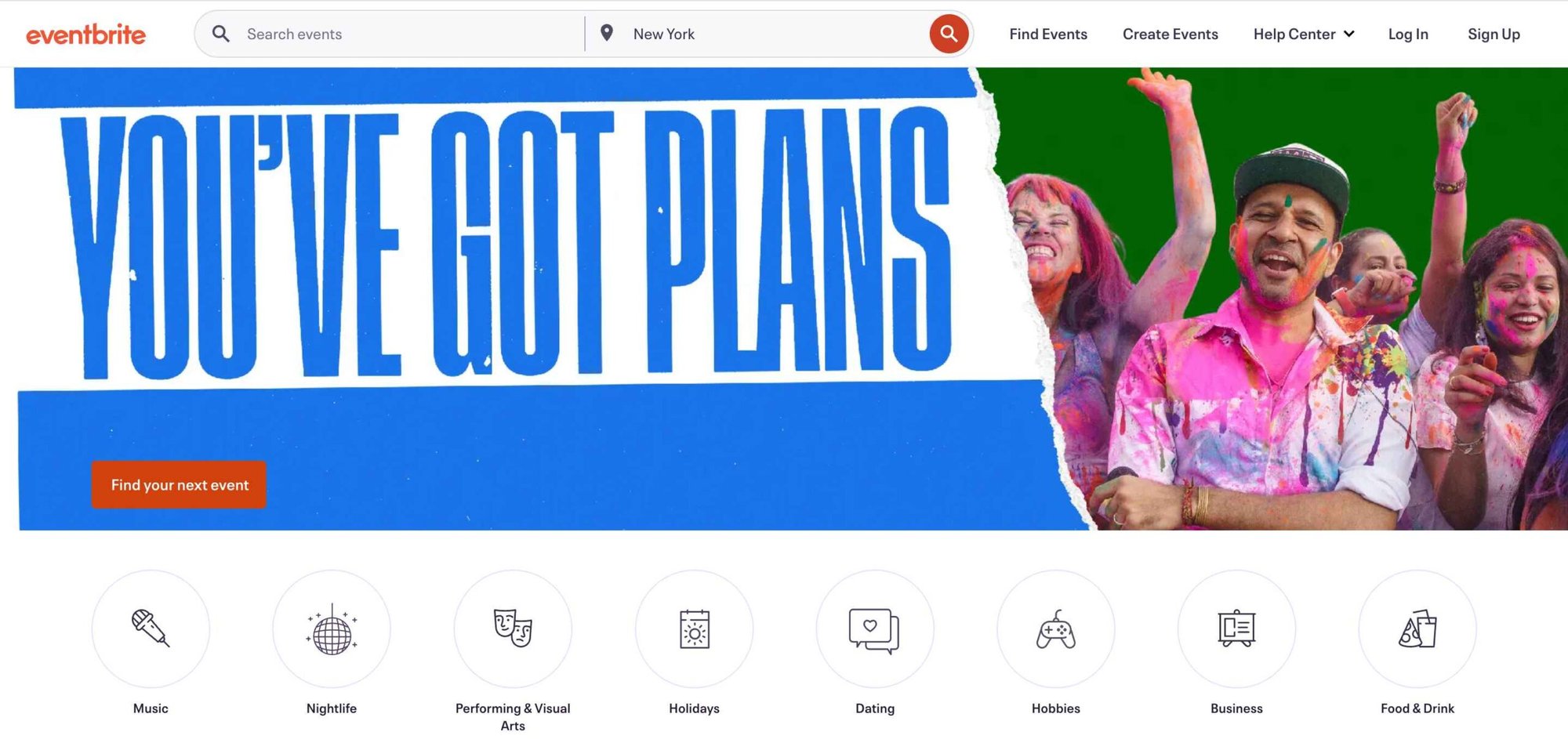
Some of its features include:
- Custom event pages: Easily create mobile-friendly event landing pages with a professional look, no coding required.
- Flexible ticketing options: Support for tiered pricing, group discounts, and donation-based tickets to suit various fundraising needs.
- Marketing tools: Integrated email campaigns, social media promotion features, and SEO tools help boost event visibility.
- Payment processing: Secure transactions with multiple payment options, ensuring donor convenience.
Qualifying nonprofits receive a 50% discount on Pro plans, making it more affordable to send additional marketing emails and access advanced features. Eventbrite also offers various support resources tailored to nonprofit organizations.
However, while Eventbrite is feature-rich, its service fees can add up, especially for larger events. Additionally, some nonprofits may find the customization options for event pages limited compared to more specialized platforms.
3. TicketTailor
TicketTailor is perfect for nonprofits that want a budget-friendly, no-frills ticketing system that puts them in control without sacrificing the features that matter. Whether you’re hosting a cozy community fundraiser or a multi-day gala with reserved seating, Ticket Tailor flexes to fit your needs.
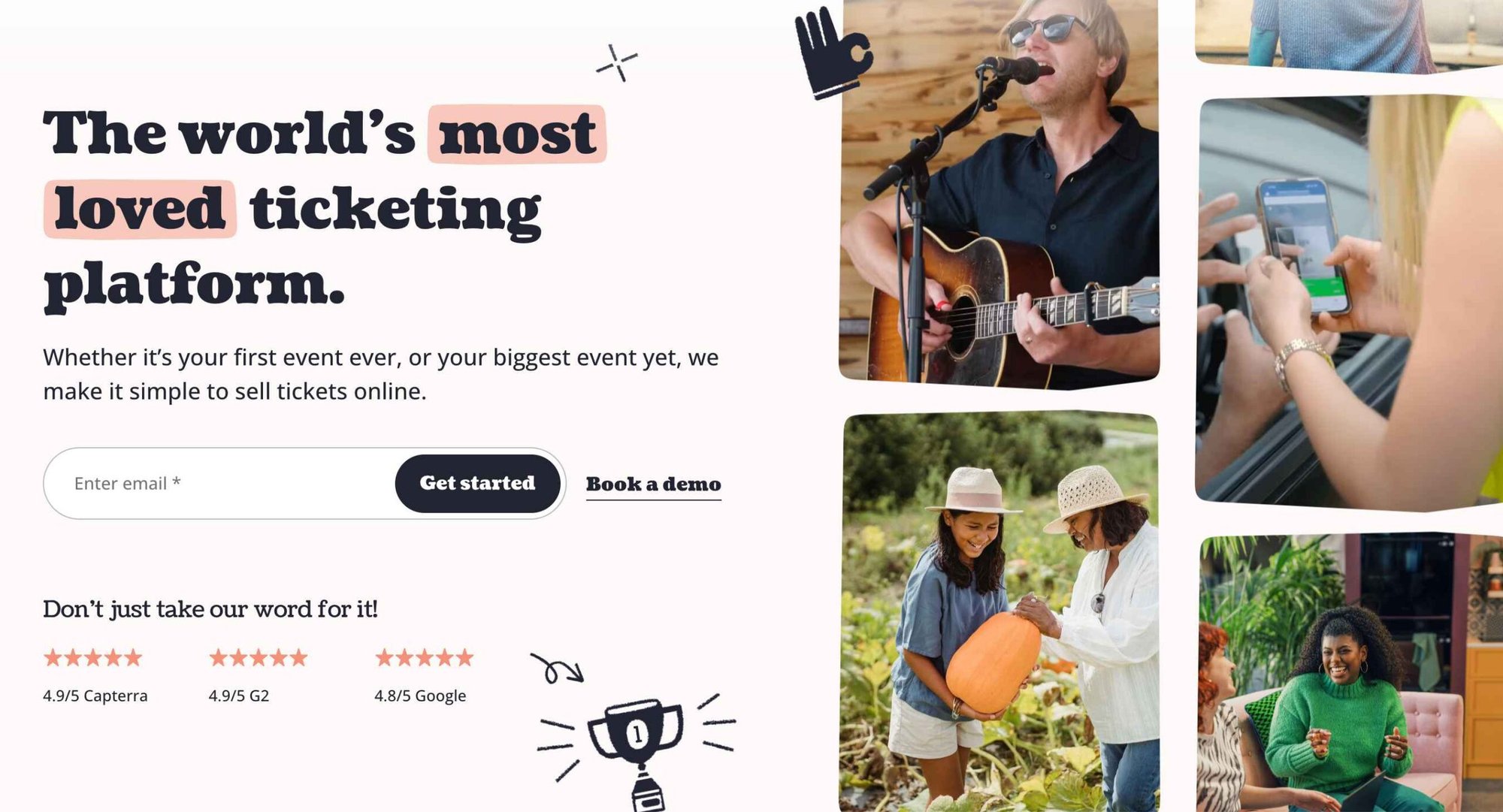
Here are some of TicketTailor’s features that nonprofits might love:
- Customizable templates and the option to use your own domain, to ensure that your event pages stay on-brand and professional.
- Ability to sell all types of tickets and ticket combinations, from general admission to time-slot events and VIP seating charts.
- Payments go straight to your Stripe, PayPal, or Square account, with instant payouts so you’re not left waiting.
- Real-time dashboards that show you what’s selling, who’s buying, and when, as well as the option to export them as needed.
- No fees for up to 5000 free tickets a year and a 50% discount for events with low-priced tickets or those supporting a good cause.
Having said that, if you rely heavily on complex marketing automation or need ultra-deep CRM integrations, Ticket Tailor’s built-in tools might feel basic. While it works well with platforms like Mailchimp and Salesforce, advanced users may need Zapier or API workarounds to fill in the gaps.
Get started for your next fundraiser
Now that you’ve got all the ingredients for event ticketing success, it’s time to put these ideas into action!
However, know that you don’t have to revolutionize everything at once. Pick one or two strategies that resonate most with your organization’s aims and set concrete goals. Track your progress, celebrate the wins, and learn from what doesn’t work quite as planned.
Most importantly, keep your supporters at the heart of every decision. The best ticketing strategy is about creating experiences that inspire people to come back again and again, bringing friends and opening their hearts (and wallets) to your cause.
Need help getting started? Our team is here to help you set up your ticketing and registration system with Event Tickets Plus. Let’s make your next fundraising event your most successful yet!

Nathan
View author page