
Key Virtual Event Metrics to Track Every Time
Estimated reading time:
1 minute
Imagine investing thousands in a virtual conference only to wonder afterward: Was it actually worth it?
Virtual events have become a marketing essential, driving engagement, filling sales pipelines, and building communities without geographical constraints. Yet for all their potential, they have a dangerous blind spot: measurability.
The hard truth is that most event marketers struggle to demonstrate clear ROI from their virtual gatherings. Without proper metrics, your next event risks becoming an expensive exercise in hope rather than a data-driven business decision.
This is precisely what we’re addressing in this article: helping you explore the key virtual event metrics you should track, why they matter, and how to use them to boost engagement, conversions, and overall event success.
Why tracking virtual event metrics matters for your business
Remember that gut-wrenching moment when your CMO asks, “So what did we actually get from that virtual event?” Without tracking metrics, you’re left stammering through vague assurances instead of showcasing concrete wins.
That’s one of the most important reasons why tracking metrics matters, but there are a few others as well.
- Prove event ROI: Metrics allow you to showcase real results, turning your event from a cost center to a revenue engine. Instead of saying, “It seemed to go well,” you can confidently report, “Our Q2 virtual summit generated 427 qualified leads and a 341% ROI.”
- Make informed decisions: Metrics reveal what you might miss in real-time. They highlight which parts of your event drive engagement and which fall flat, providing a data-driven approach to event planning.
- Ensure accountability: Metrics hold every aspect of your event accountable, exposing the true performance of speakers, sessions, and campaigns, freeing you from subjective assumptions.
- Set benchmarks for future events: The most powerful question in virtual event marketing isn’t “How did we do?” but “How did we do compared to last time?” Tracking consistent KPIs lets you compare events over time, set realistic goals, and continuously improve. It transforms each event into an opportunity to refine strategies and enhance audience experience.
Key virtual event metrics to track for measuring online success
Okay, enough with the dire metric tracking warnings. Now that we know why metrics matter, let’s move on to which metrics you should track. You should be looking for these vital signs that reveal your event’s true health and impact.
Registration metrics

Before a single attendee logs in, your registration data is already telling a story. These metrics may not help you diagnose everything, but they’ll certainly signal if something’s wrong with your event strategy. Here are eight registration metrics that reveal whether your event has captured audience interest or is struggling for attention.
1. Total registrations
The vanity metric that actually matters — the number of people who signed up for your event.
While raw numbers don’t tell the whole story, they do set the ceiling for your event’s potential impact. A registration list of 500 versus 50 represents dramatically different opportunity landscapes, and often signals whether your event premise resonated or fell flat with your target audience.
When your CMO asks about event performance, this is typically the first number they’ll want to hear.
2. Registration conversion rate
When someone lands on your event page, they’re essentially asking: “Is this worth my time?” Your conversion rate reveals how convincingly you’ve answered that question.
This metric is the percentage of visitors who completed the registration process after landing on your event page.
Formula:
Registration conversion rate = (Total number of registrants / Total number of visitors to the event page) × 100
For example, if 500 people visit your event page and 100 sign up, your conversion rate is:
(100 / 500) × 100 = 20%
If 1,000 people visit but only 20 register (a 2% conversion rate), you’re not facing a traffic problem; you’re facing a persuasion problem. Something in your value proposition, design, or registration process is actively turning people away. Conversely, a 40% conversion rate suggests you’ve created an irresistible offer for the right audience.
3. Landing page bounce rate
The digital equivalent of someone walking into your store, taking one look around, and immediately walking out. A high bounce rate is the silent killer of virtual events. These are people who were interested enough to click but repelled enough to leave without a second thought.
For example, if 1,000 people visit the page but 700 leave without registering, the bounce rate would be 70%.
Typically, a 70%+ bounce rate signals fundamental problems: perhaps your headline doesn’t match your ad promise, your page loads too slowly, or your design appears unprofessional. So your potential attendees don’t even stick around long enough to tell you what went wrong. They just disappear, taking their feedback with them.
4. Registrant sources
This metric breaks down how registrants found your event. Whether it’s email campaigns, social media, paid ads, or referrals, understanding where your audience is coming from can help you fine-tune your marketing strategy.
Let’s say 300 people registered for your event via email, 100 through social media, and 50 from referrals. With this information, you can focus more on the most effective channels in future campaigns.
However, dig deeper than just volume, as each channel often brings different audience qualities. Email registrants might show higher attendance rates but lower engagement. Social registrants might be more interactive but less likely to convert to customers. The channel often predicts how attendees will behave once they arrive.
5. Email open and click-through rates
Your subject line gets just 3–5 words to compete against dozens of other emails for your recipient’s attention.
The open rate reveals whether you’ve won or lost that critical first battle. But getting an open is just round one. Your click-through rate shows whether your email content delivered on the subject line’s promise and readers clicked through to your event registration page.
Formula for CTR:
Click-through rate = (Total emails clicked) / (Total emails sent – Emails bounced) × 100
For example, if you send 1,000 emails, out of which 150 people click the registration link and 100 emails bounce, the CTR is:
150 / (1,000-100) x 100 = 16.67%
When you see a healthy 25% open rate paired with an anemic 0.5% click rate, you’ve discovered a disconnect between what attracted recipients and what failed to convince them.
Was your register button hidden? Did your copy lack urgency? Did you bury the value proposition? Finding this gap between curiosity (opens) and conviction (clicks) helps you identify where your virtual event leaks potential attendees and take measures to fix the process.
6. Social media engagement (before the event)
When someone shares your event post, they’re putting their personal reputation behind your event. When they comment, they’re publicly associating themselves with your brand.
This pre-event buzz creates powerful social proof. New visitors who discover your event see that real people, perhaps people they know and respect, are already excited about attending. This creates FOMO (fear of missing out) that passive advertising simply can’t match.
A cold LinkedIn ad might get scrolled past, but seeing three colleagues discussing their excitement about your upcoming panel? That’s scroll-stopping.
7. Cost per registrant
Tracking this metric helps you figure out how much you spent to acquire each registrant.
Formula:
Cost per registrant = Total event marketing cost / Total number of registrants
For example, if you spent $1,000 on marketing and got 200 registrants, the cost per registrant is:
$1,000 / 200 = $5 per registrant
The cost-per-registrant metric is a good start to evaluate the cost-effectiveness of your marketing efforts and determine where to invest more or less in the future. However, we would like to mention again that some channels deliver higher-quality registrants who are more likely to attend, participate, and ultimately convert into customers.
A $50 registrant who becomes a $5,000 client outperforms ten $5 registrants who never show up. This is why cost per registrant must be viewed alongside attendance and conversion metrics to reveal the complete ROI picture, not as a siloed metric.
Attendance metrics
Registration numbers might feed your ego, but tracking attendance metrics reveals the brutal truth — did people actually show up when it mattered? The gap between “I’ll be there” and “I am here” exposes the real strength of your event’s value proposition. These five attendance metrics strip away the wishful thinking and show you exactly how compelling your virtual event truly was.
8. Attendance rate
The moment of truth for every virtual event. When someone registers, they’re making a promise. When they attend, they’re keeping it. This simple ratio exposes the gap between intention and action.
Formula:
Attendance rate = (Total attendees / Total registrants) × 100
For example, if 1,000 people registered but only 700 attended, your attendance rate would be:
(700 / 1,000) × 100 = 70%.
Industry benchmarks suggest 40–50% attendance is average, 30% or below signals trouble, and 60%+ indicates exceptional interest. When your webinar draws only 120 attendees from 600 registrations (20% attendance), it’s essentially a warning sign that something is fundamentally broken in your event’s perceived value, your reminder strategy, or both.
If the rate is lower than expected, you might need to increase pre-event engagement or improve reminders to boost attendance.
9. Returning participants
Like a restaurant regular who keeps coming back despite countless dining alternatives, a repeat attendee is the ultimate validation for your event. They’ve experienced your event before and consciously chosen to return. That shows strong loyalty and satisfaction.
The percentage of returning participants reveals whether you’re building a community or just attracting one-time curiosity seekers. These returning participants become your most valuable marketing asset, often recommending your events to colleagues because their own reputation is now tied to your quality.
10. Day-by-day attendance (for multi-day events)
For events that span multiple days, audience attendance isn’t always guaranteed for the entire event duration. Your attendance pattern across days tells a story about content quality, attendee stamina, and schedule effectiveness.
Say you observe a classic attendance pattern — strong Day 1, significant drop on Day 2, slight recovery for Day 3 finale. This shows where your event is failing to maintain momentum. When you see attendance drop from 500 to 300 between days, those 200 people are silently telling you: “Yesterday wasn’t worth my time.”
This metric becomes particularly revealing when analyzed by attendee segment. Perhaps executives maintain consistent attendance while mid-level managers drop off dramatically. Or maybe international attendees show higher persistence than domestic ones. These patterns help you identify which content resonates with specific audience segments, allowing you to tailor future agendas to maximize retention of high-value participants.
11. Attendance by time of day
For virtual events, timing can be a competitive advantage. Hourly attendance patterns reveal prime windows of attention that should command premium content and speakers.
For example, if your webinar attendance consistently peaks at 11 AM but drops by 40% after 2 PM, you’ve found the perfect time slot to schedule sessions that maximize participation, and the worst possible time for your sales pitch.
This insight is especially useful for global events, where time zones vary, and understanding peak engagement times helps tailor your schedule to international audiences.
12. Event app download rate
If you use an event app, it is your control center for deeper engagement. The download rate reveals how successfully you’ve communicated its value proposition to attendees.
App users typically show 3–5x higher engagement rates, access more content, and participate more actively in networking opportunities. They’re getting your premium experience while non-app users receive the basic version.
More tellingly, app downloads often predict attendance quality. When attendees invest the time to download and set up your app pre-event, they’re demonstrating higher commitment levels that typically translate to longer attendance duration and higher participation rates.
Engagement metrics
While attendance metrics count bodies in virtual seats, engagement metrics reveal minds actively participating in your event. These metrics separate passive viewers from enthusiastic participants and ultimately predict who will take meaningful action after your event concludes. Here are ten engagement measurements that expose whether your audience is captivated or merely present.
13. Event engagement rate
This tells you what percentage of attendees interacted during the event — whether that’s asking questions, participating in chats, or clicking on resources. A high engagement rate means your audience is involved and interested in what’s happening.
Formula:
Event engagement rate = (Total actions taken by attendees / Total number of attendees) × 100
When your engagement rate shows that only 15% of attendees asked questions, participated in polls, or downloaded resources, the remaining 85% might as well have been watching television. They received your content but gave nothing back; no questions, feedback, or measurable interest signals.
Truly successful virtual events achieve high engagement rates by designing participation directly into the experience, such as strategically deploying polls at content inflection points, building in collaborative exercises, and explicitly inviting interaction throughout rather than tacking on a Q&A at the end as an afterthought.
14. Live polling participation rate
Live polling helps you gauge how engaged attendees are by asking them to respond to questions during the event. A high response rate shows that your audience is actively participating and interested in contributing their thoughts.
Top-performing events achieve strong response numbers by positioning polls strategically — following provocative statements, presenting surprising data, or creating moments of tension that polls help resolve.
Encourage participation by keeping polls short and relevant to the session content. Make sure they’re timed well throughout the event to keep momentum going.
15. Session popularity
This helps you identify which sessions are drawing the most attention and engagement. By looking at both attendance and interactions, you can determine what topics your audience finds most valuable.
For example, at a virtual conference on tech innovation, a session about AI might attract 600 attendees, while a session on general trends might only attract 200.
Use this information to plan future events. Double down on what’s working and tweak or replace less popular sessions to maintain interest.
16. Resource downloads and CTA clicks
When attendees download your slide deck or click your call-to-action button, they’re making a critical shift from passive consumption to active interest and taking the first meaningful step in their journey from audience member to potential customer.
Tracking how many attendees accessed materials or clicked on CTAs, like signing up for newsletters or downloading offers, is a great way to measure whether attendees find your additional resources valuable.
This metric bridges the gap between engagement measurement and actual business impact, making it one of the most crucial indicators of event success. So, if your download or CTA click rates are low, consider making resources more prominent or offering more incentives for downloads, like bonus materials.
17. Gamification response
Gamification elements like quizzes, leaderboards, and challenges are fantastic for engaging your audience. When implemented effectively, gamification participation rates often exceed other engagement mechanisms by 2–3x.
The difference isn’t content, it’s context. The addition of competition, achievement, and recognition frameworks taps into our fundamental desire to progress and win, no matter the subject matter.
Gamification is also a good way to measure participation sustainability. While other engagement metrics often decline throughout an event, gamification typically maintains or even increases participation over time as point totals accumulate and leaderboard positions become established. If you see that attendees are consistently engaging with your quizzes and challenges, you’ve discovered one of the few reliable mechanisms for combating virtual event fatigue.
18. Drop-off rates during live and recorded sessions
Drop-off rates measure when attendees stop watching or leave a session. Every minute of your virtual event is being continuously judged by your audience, with their verdict delivered through their decision to stay or leave. The resulting drop-off curve tells you an honest story about your content quality, better than any survey.
According to the Virtual Events Benchmark Report for Q2 2021 by Bizzabo, only 42% of attendees watch a virtual session in its entirety. Moreover, if session lengths exceed 60 minutes, there is often a sharp increase in drop-off rates.
This gives us an easy solution — if drop-offs are happening at certain times, consider shortening sessions or making them more engaging with interactive elements like polls or live Q&As to keep attention high.
19. Live stream retention rate
With unlimited content options and shrinking attention spans, your audience’s time is their most precious resource. Retention rate reveals how much of that resource they’re willing to invest in your content by measuring how long people stay engaged during live sessions.
Formula:
(Average view duration / Total content duration) × 100
If retention rates are low, try adjusting the length of your sessions or breaking up content into shorter, more digestible segments. You can also incorporate engagement elements every 3–5 minutes, and design presentations specifically for digital attention spans rather than repurposing in-person formats.
20. Speaker/session rating
Unlike passive metrics that must be interpreted, ratings provide direct feedback expressing attendee satisfaction, making them invaluable for speaker selection and content planning.
While average ratings provide baseline feedback, the distribution pattern tells a more nuanced story. A speaker with a 4.0 average from mostly 4-star ratings demonstrates consistent quality, while another with the same 4.0 average but split between 5-star and 3-star ratings is polarizing your audience, pleasing some greatly while disappointing others.
The correlation between ratings and other engagement metrics reveals even more. When a highly-rated session (4.8/5.0) shows below-average retention and minimal Q&A participation, you’ve identified the “entertainment trap” — content that attendees enjoy but that fails to drive meaningful engagement or action.
Conversely, sessions with moderate ratings (3.8/5.0) but exceptional download rates and CTA clicks often deliver superior business outcomes despite being less immediately pleasing to attendees.
Conversion and sales metrics

Conversion metrics, like lead generation, sales performance, and how your event impacts your sales pipeline, are what your CFO actually cares about. These are the numbers that transform your virtual event from a content delivery mechanism into a revenue-generating engine. Here are the seven metrics that bridge the gap between “successful event” and “successful business outcome”.
21. Website traffic increases
The invisible ripple effect of your virtual event extends far beyond the event platform itself. Your corporate website often experiences traffic spikes at three critical moments:
- During pre-event promotion (indicating marketing reach).
- Immediately during the event (showing real-time interest).
- In the 72 hours post-event (revealing lasting impact).
Now, when your webinar drives a 400% traffic increase to your solution pages, not just event pages, you’ve created momentum that goes beyond the event itself. This traffic surge represents potential customers actively seeking more information after being convinced by your content.
Make sure to analyze traffic sources during these spikes. When direct traffic (people typing your URL) and branded search traffic both increase substantially, it signals that your event has successfully made your brand memorable enough that people are actively seeking you out.
22. Conversion rate
The conversion rate measures how effectively your event drives sales or other desired actions on your event website. It shows the percentage of visitors who complete a goal, such as making a purchase or signing up for a service.
Formula:
Conversion rate = (Number of sales / Number of site visitors) × 100
While average website conversion rates hover around 2–3%, event-driven traffic should significantly outperform this benchmark. Analyze the conversion window after your event. Does it spike immediately or build gradually?
Immediate conversions (within 24 hours) typically signal transactional success: Your event created urgency that drove immediate action. Conversions that build over 7–14 days often indicate relationship-building success: Your event established trust that led to considered decisions after further research.
23. New leads generated
Lead generation from virtual events happens through multiple channels that sophisticated event marketers track separately:
- Registration-phase leads (people who register but don’t attend).
- Attendance-phase leads (people who attend and provide information).
- Post-event content leads (people who access recordings or materials after the live event).
Each category represents different intent levels and requires tailored follow-up strategies. When your virtual summit generates fresh contacts that weren’t previously in your CRM, you’ve expanded your addressable market regardless of immediate conversion performance.
The quality dimension matters even more than quantity. Ten C-suite leads from target companies often deliver more value than 100 entry-level leads from organizations outside your ideal customer profile.
24. Opportunity creation rate
The opportunity creation rate tells you the percentage of leads that advance to the sales pipeline, ready for follow-up.
Formula:
Opportunity creation rate = (Leads moved to sales pipeline / Total leads generated) × 100
Top-of-funnel educational events typically generate more leads but fewer immediate opportunities, while bottom-funnel demonstrations convert fewer leads but at higher rates.
What’s particularly valuable is tracking opportunity creation velocity alongside the rate itself. How quickly do event leads convert to opportunities? A 20% opportunity rate where all conversions happen within 48 hours signals different content effectiveness than the same 20% rate spread over six weeks.
25. Sales Qualified Leads (SQLs)
SQLs are leads that meet specific criteria for sales follow-up. These leads show clear intent to purchase and deserve the maximum attention from your sales team.
A potential attendee who could turn into an SQL could be someone who has:
- Attended multiple sessions (particularly product-focused ones).
- Engaged with high-intent content (pricing pages, comparison guides).
- Asked specific implementation questions.
- Requested a follow-up during the event.
The SQL ratio (SQLs / Total Leads) reveals your event’s efficiency at attracting the right audience. Down the line, if you have a high SQL-to-opportunity conversion rate, you have proven your event’s qualification power and can justify increased investment in this acquisition path.
26. Lead quality score
This metric assigns a score to each lead based on factors like engagement, demographics, and interaction history. A higher score indicates a higher likelihood of conversion.
Sophisticated lead scoring models for virtual events typically weight three key dimensions:
- Firmographic fit (company size, industry, revenue).
- Behavioral engagement (session attendance, question asking, resource downloads).
- Buying intent signals (viewing pricing content, requesting demos, comparing options).
What makes virtual events uniquely powerful for lead scoring is the behavioral data richness unavailable through other channels. When an attendee watches your pricing session, downloads your implementation guide, and asks three specific questions about integration capabilities, they’ve revealed buying intent through actions, not just declarations.
27. Cost per lead
Every marketing channel battles for budget share. This metric determines whether your virtual events deserve to win that fight.
Cost per lead measures how much it costs to generate each lead through your event marketing efforts.
Formula:
Cost per lead = Total event cost / Number of leads generated
While average B2B cost-per-lead benchmarks range from $30–$500, depending on industry, virtual events typically deliver leads at the lower end of this spectrum when executed effectively. The true power comes from segmenting cost-per-lead by quality tier:
- What’s your cost per high-scoring lead (80+ points)?
- What’s your cost per SQL?
- What’s your cost per lead from your target account list?
These segmented calculations often reveal surprising efficiency. Your overall cost-per-lead might be $75, but your cost per target-account lead might be just $120, which is far below what other channels can deliver for these high-value prospects. This granular analysis prevents the mistake of judging event efficiency solely on overall volume metrics that can mask strategic targeting success.
28. Customer acquisition cost (CAC)
CAC measures how much you’ve spent to acquire each new customer from your event. It helps you understand the financial impact of your event.
Formula:
CAC = Total event cost / Number of new customers acquired
A lower CAC indicates that your event is effectively driving sales without overspending. What makes virtual event CAC analysis particularly powerful is the attribution window. Unlike many marketing channels where attribution becomes muddled after 30 days, virtual events often drive purchases 60–90 days later as organizations move through complex buying cycles.
This time-series analysis often reveals that events which appeared moderately successful in the immediate aftermath actually delivered exceptional ROI when measured across appropriate buying timeframes for your industry.
Attendee satisfaction metrics
Quantitative metrics tell you what happened during your event, but satisfaction metrics reveal how attendees felt about the experience. These emotional verdicts often predict future behavior more accurately than any engagement statistic.
An attendee might have perfect attendance but leave feeling underwhelmed, or miss half your sessions yet become your most enthusiastic advocate. These six metrics capture the subjective human experience that ultimately determines whether your virtual event succeeds or fails:
29. Post-event survey results
Surveys are one of the most direct ways to gather feedback from your attendees. By asking about content quality, interaction opportunities, and the overall event experience, you can uncover strengths and areas for improvement.
Post-event surveys provide a deeper understanding of attendee satisfaction and specific elements that impacted their experience. After a product launch webinar, you might ask attendees how they felt about the session’s content, if the interactions (like Q&A) were engaging, and if the overall experience met their expectations.
Make sure to keep your surveys concise and ask open-ended questions to get detailed responses. This will give you more actionable insights for future events.
30. Net Promoter Score (NPS)
The single question that predicts whether your virtual event will grow organically or wither from indifference.
“On a scale of 0–10, how likely are you to recommend this event to a colleague?”
This deceptively simple question has become the gold standard for measuring event satisfaction because it captures something fundamental: An attendee’s willingness to stake their personal reputation on your event’s value.
Net Promoter Score (NPS) is a widely used metric to gauge attendee satisfaction and how likely they are to recommend the event to others. This score divides attendees into three groups:
- Promoters (9–10): Highly satisfied attendees who will advocate for future events.
- Passives (7–8): Satisfied but unlikely to actively promote the event.
- Detractors (0–6): Unhappy attendees who might discourage others from attending.
Formula:
NPS = %Promoters – %Detractors
For example, if 70% of attendees give a 9 or 10 rating, and 10% rate it between 0 and 6, your NPS would be:
70% – 10% = 60
What makes NPS particularly valuable is its predictive power. Events with high NPS scores consistently show stronger registration numbers for subsequent events, often much higher than events with average scores. This correlation between satisfaction and future growth makes NPS the closest thing to a crystal ball for your virtual event program’s trajectory.
31. Follow-up engagement rate
This metric tracks how many attendees engage with post-event emails, surveys, or marketing offers. If your event is successful, attendees will want to stay engaged with your brand or offerings.
High follow-up engagement indicates that your event had a positive impact, and attendees are interested in continuing the conversation. If engagement is low, it suggests the need for a stronger post-event strategy.
One of the best ways to sustain follow-ups long after the event is to personalize your follow-up communications and increase engagement. Offering exclusive post-event content or deals can incentivize attendees to continue interacting with your brand.
32. Customer retention impact
Many organizations focus on virtual events as lead generation tools. However, you need to go beyond acquisition and strengthen existing customer relationships to reduce churn and expand revenue.
Customer retention impact measures how many existing customers attended your event and whether it influenced their continued engagement or purchases. It’s especially important for businesses that rely on customer loyalty.
You could use this data to calculate:
- Retention lift: Comparing churn rates between customers who attended versus similar customers who didn’t.
- Expansion impact: Measuring additional product adoption or increased spend following event attendance.
- Support reduction: Tracking whether customers who attend training or user events subsequently require less technical support.
- Advocacy activation: Monitoring referrals, case study participation, or testimonial contributions post-event.
Turning data into actionable insights
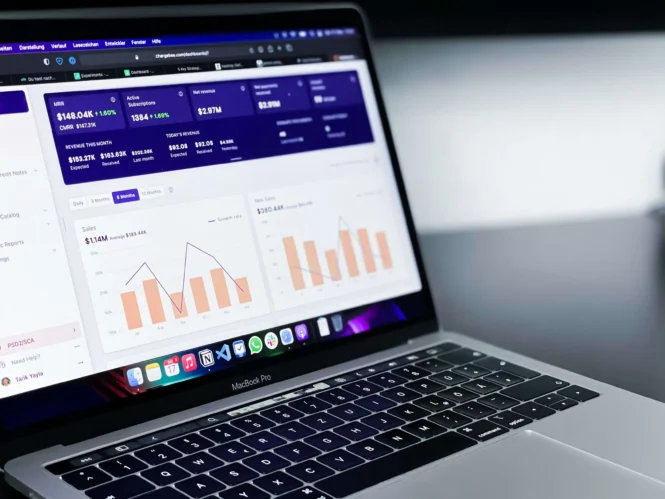
To streamline the process of turning data into actionable insights, make use of analytics platforms. Tools like Google Analytics, HubSpot, and event-specific dashboards can automate tracking and reporting, making it easier to monitor key metrics in real time.
Set up automated reports to track event performance metrics like website traffic, conversion rates, and lead generation.
You can use Event Tickets Plus to experiment with different pricing strategies, early bird discounts, or bundle offers to boost sales and drive better results. If you notice that specific channels (e.g., email, social media, or paid ads) generate more sign-ups, focus your marketing efforts on these platforms next time.
Tools like Promoter can help you segment your audience and create targeted email campaigns based on event interactions. For example, send a follow-up email offering discounts to attendees who engaged with specific product demos during the event. Timing is key, so use data to reach out to leads when they’re most likely to convert.
Power your next virtual event with data-driven insights
Tracking the right data points is the secret to making your virtual events more impactful and successful. Instead of guessing what worked, you can rely on concrete insights gathered from attendee behavior, conversion rates, and post-event feedback. These metrics give you a clear understanding of what’s resonating with your audience and what needs adjustment.
As you plan your next virtual event, let data guide your decisions. When you understand your audience and how they engage, you can create events that drive real results.
Ready to take your events to the next level? Sign up for our newsletter for in-depth insights on improving your event ROI!

Nathan
View author page