

10 Event Trends Reshaping Live Experiences in 2025

Estimated reading time:
1 minute
“Nobody shows up anymore.” “Virtual events feel soulless.” “We can’t prove our ROI.”
As an event organizer in 2025, chances are that you’ve faced these challenges as well, and that’s mostly because people’s expectations of live events have changed in the past few years. Compared to the past, you need much stronger motivators to drive live event attendance.
Fortunately, the same technological revolution that disrupted the events industry is now offering solutions that would have seemed impossible just a few years ago.
Think AI that reads the room and adjusts your meeting agenda on the fly. Picture conferences where you can hop between real-world workshops and personalized virtual sessions.
Far from killing traditional events, these tools are making them better than ever. Ready to see how? Let’s explore ten event industry trends that are transforming live events from “just another gathering” into unforgettable experiences.
1. AI-driven personalization revolution
Gone are the days of one-size-fits-all events. According to the Freeman Trends Report Q1 2024, 45% of attendees say they’re more likely to show up to live events if they can customize their experience.
That’s exactly where AI can help.
Say an attendee walks into a session about marketing automation; based on their engagement, the AI algorithm might suggest they check out the social media analytics workshop next door, where they’ll meet three other marketers facing similar challenges.
Apart from content matching, AI tools offer real-time translation services to help international attendees feel at home and smart closed captioning to make every session accessible to hearing-impaired participants. The technology even keeps an eye on diversity, flagging if your speaker lineup needs more varied voices.
And here’s the wellness twist: AI now reads the room, literally. AI tools like Zenus AI can monitor crowd energy levels and suggest when it’s time for a meditation break or direct attendees to quieter networking spaces.
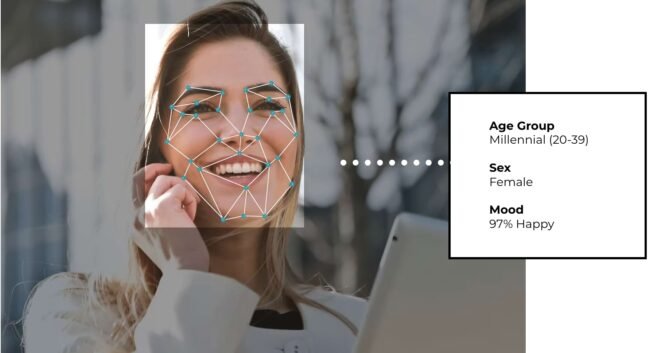
Some events can even use AI to customize meal options, ensuring everyone, from vegans to those with food allergies, feels catered for.
2. Blending AR/VR for enhanced engagement
When Paris Fashion Week 2024 let attendees “try on” runway pieces in real-time through AR mirrors, it wasn’t just showing off. It was proving that AR and VR aren’t just fancy add-ons anymore; they’re going to become an integral part of live events.
Event organizers are also having a lot of fun turning these experiences into playgrounds that tie into the main event theme. Examples include setting up AR scavenger hunts where attendees chase virtual clues through real conference halls, or VR team-building exercises where colleagues from different continents solve puzzles together in a virtual escape room.

The interesting thing is that all these interactions create data gold mines.
Every virtual tap, every AR interaction, and every VR movement helps organizers understand what’s working (or not) in real time. Seeing too many people skip a certain AR display? Swap it out. Notice the virtual breakout rooms are packed? Create more on the fly.
This year, it is all about creating immersive experiences in events, where they respond to you, adapt with you, and create moments that stick with you long after the last session ends.
3. Innovative sustainable event solutions
Let’s talk about the elephant in the room – or rather, keeping the elephant’s home safe. Event sustainability isn’t just a buzzword nowadays, it’s become a very important consideration for event planners.
Attendees are here for it, especially the under-30 crowd, who’d rather skip an event entirely than support one that ignores its environmental footprint.

Sustainable doesn’t have to be boring, though. Here are some ideas:
- Embed the attendees’ badges with seeds that they can plant afterward.
- Use a renovated solar-powered warehouse as your conference venue.
- Partner with local vendors who share your earth-friendly vision rather than flying in supplies from all over the country. Opt for farm-to-table catering, rentable decor from local artists, and even furniture borrowed from community centers that can be donated to schools afterward.
These choices create ripple effects beyond the event itself. When a food festival donates its surplus to local shelters, it prevents waste and feeds 500 families. When a music festival partners with a local eco-friendly fashion brand for staff uniforms, it can spark a trend that spreads to other events in the region.
And venues are catching on. Those shiny LEED certifications are becoming a must-have for organizers who know their attendees care about where they spend their time. Water-saving fixtures, energy-efficient lighting, and green venues are becoming the new normal.
4. Hybrid and virtual events and the growth of phy-gital communities
Remember when “hybrid” meant awkwardly livestreaming a conference to a handful of remote viewers? In 2025, we’re way past that. Today, events are blending physical and digital experiences, and the results are revolutionary.
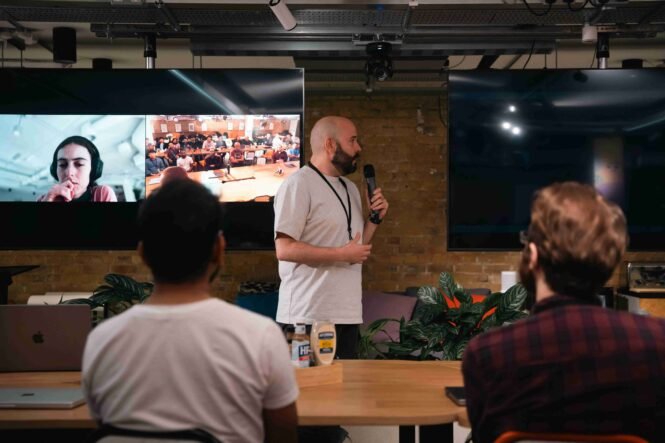
Traditional conferences used to end with a “goodbye and see you next year” but now, they’re launching pads for vibrant year-round communities. That keynote speaker everyone loved? She’s hosting exclusive monthly webinars for community members. Those breakthrough discussions from the main stage? They’re continuing in moderated forums where professionals from across the globe share insights.
Event organizers use sophisticated analytics to track all event metrics, from session popularity to engagement patterns, constantly fine-tuning their approach. They’re discovering that success is about creating lasting connections that transcend the event itself.
5. Increased focus on data privacy and security
Live events involve online ticket selling, attendee registrations, payment transactions, and digital check-ins, all of which require stringent data security measures. As a result, data protection is becoming a key factor in attendees’ decision-making process. With high-profile event data breaches making headlines, event managers who can demonstrate superior security measures will have a significant edge over their competitors.

Success in this space requires a three-pronged approach:
- Implement enterprise-grade security measures like end-to-end encryption and multi-factor authentication for all attendee data touchpoints.
- Make these security features visible and understandable to attendees through transparent communication.
- Turn security awareness into an engaging part of the event experience through gamification — security briefing games, data protection challenges, and rewards for privacy-conscious behavior.
Smart organizers are already using their security credentials as a marketing tool, highlighting their investment in data protection during the registration process and throughout the event journey. For high-stakes corporate events and conferences handling sensitive information, this enhanced security focus is becoming a must-have rather than a nice-to-have feature.
The message is clear: In 2025, the most successful events aren’t just the ones with the coolest tech — they’re the ones that treat data protection as seriously as they do attendee experience. Because trust, once broken, is harder to rebuild than any event platform.
6. Emerging venue and format innovations
Who says you need Times Square to make headlines? The hottest events of 2025 are popping up in the places you’d least expect and running to full houses. Mid-sized cities are having their moment in the spotlight, and savvy organizers are here for it. Lower costs? Check. Unique local flavor? Double-check.
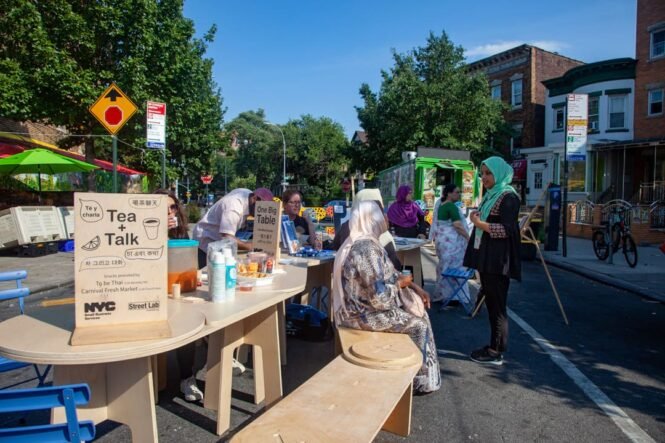
But it’s not just about location. Smart venues are getting, well, smarter.
Event spaces are now equipped with IoT sensors and AI-driven systems to automatically optimize everything from room temperature to crowd flow while providing real-time data on attendee movement and engagement patterns.
Another trend is the emergence of modular and transformable spaces that can shape-shift throughout an event, like walls that move to create different configurations, floors that change function, and environments that adapt to different activities throughout the day.
For event planners, this means developing new skills in spatial computing and environmental design. Success will require understanding how to orchestrate these smart spaces to create fluid, intuitive experiences that make traditional static venues feel outdated.
7. Gamification gets serious (but stays fun!)
Remember when adding points and badges to your event was enough to make it “gamified”? Well, 2025’s attendees aren’t playing around anymore, and they want games that actually mean something.
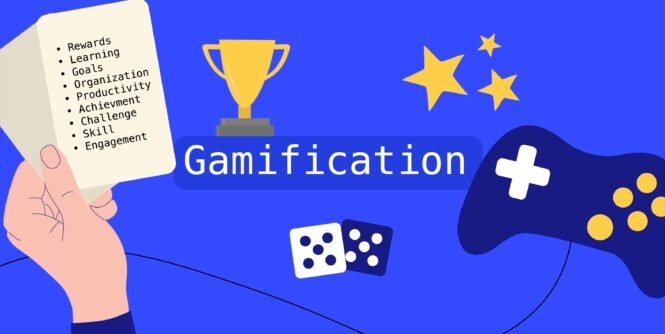
This gamification strategy can be applied to many other areas. For example, ditch the basic networking where people have to meet awkwardly and try to find common ground. Instead, create a treasure hunt where finding the right conversation partner unlocks exclusive content.
You can do something similar for the learning sessions by turning them into multi-level challenges where mastering new skills earns you real-world perks. Even feedback forms are getting the game treatment, with attendees actually looking forward to sharing their thoughts (wild, right?).
Moreover, mixed reality is taking these games to a whole new level. Imagine physical conference spaces where AR layers turn every corner into a potential adventure. One minute, you’re collecting virtual badges by attending sessions; the next, you’re teaming up with other attendees to solve industry-specific puzzles that unlock VIP experiences.
And while everyone’s having fun, these games are secretly doing some heavy lifting. They’re matching people with similar interests, tracking which content resonates most, and gathering incredibly detailed feedback, all without feeling like work.
It’s like having a party and a focus group at the same time, except everyone actually wants to be there!
8. Experiential marketing for top-of-mind brand recall
Want to know why some events in 2025 are selling out in minutes while others struggle to fill seats? Two words: Experiential marketing.
Boring brand booths with promotional pens and awkward sales pitches are a thing of the past, and an active social media presence is what can make or break your popularity. These days, if your brand isn’t creating a social-sharing moment, are you even trying?
Take a page from the brand experience playbook. Refinery29’s 29Rooms marketing campaign is a great example of how you can turn event marketing into an art form. They crafted 29 distinct, Instagram-worthy rooms that tackled everything from social issues to pop culture. Each space was designed to be shared, photographed, and talked about, with event-specific hashtags that took over social media. Plus, they brought in artists, brands, and influencers to design each room, basically turning their collaborators into natural marketing champions.
Another example is when M&M’s created those wild flavor rooms where you could literally walk through different candy experiences. That’s the kind of buzz your event needs to generate before it even starts!
Of course, these are very specific examples, but what they have in common is that they turn the entire event marketing process into shareable moments. For your business, this could translate into mini-events on LinkedIn Live where speakers share 10-minute teasers of their sessions, complete with live Q&As and exclusive pre-event networking rooms. Or perhaps you could drop location-based AR experiences a few weeks before the event, and attendees who find and interact with these virtual touchpoints would unlock special perks at the main live event venue.
The goal is to make your pre-event marketing as valuable as the event itself. Give people reasons to engage way before day one.
9. Micro-events for deeper connections
Sometimes, less really is more.
Welcome to the world of micro-events, where intimacy trumps scale and every conversation has room to breathe. The venues are smaller, but they offer an intensity and connection that you just can’t replicate in a stadium.
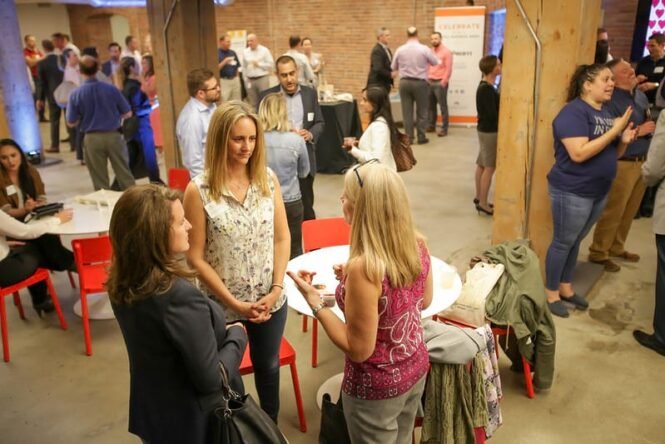
These gatherings are popping up everywhere.
- A series of chef’s table dinners where restaurant investors meet rising culinary stars.
- Monthly dawn photography walks that bring together creative directors and brand strategists.
- Even major conferences are getting in on the act, breaking their massive audiences into pocket-sized groups for deep-dive sessions and targeted networking.
The reason is simple. When you’re hosting twenty people instead of two thousand, you can tailor everything, from the welcome notes to the seating arrangements, with surgical precision.
But don’t let the size fool you; these intimate gatherings pack a punch. They’re incubators for ideas, catalysts for partnerships, and launching pads for movements. Because when you put the right people in the right room with the right conversation starters, big things happen in small spaces.
10. Multi-sensory moments and tactile experiences
After two hours of non-stop sessions, your nose catches a whiff of fresh-baked bread. Following the aroma, you discover a pop-up bakery where a master baker is teaching attendees how to knead dough. The gentle thump of hands working flour mingles with ambient music designed to match the rhythm of breadmaking.
This feast for the senses is how many event planners are fighting event fatigue.
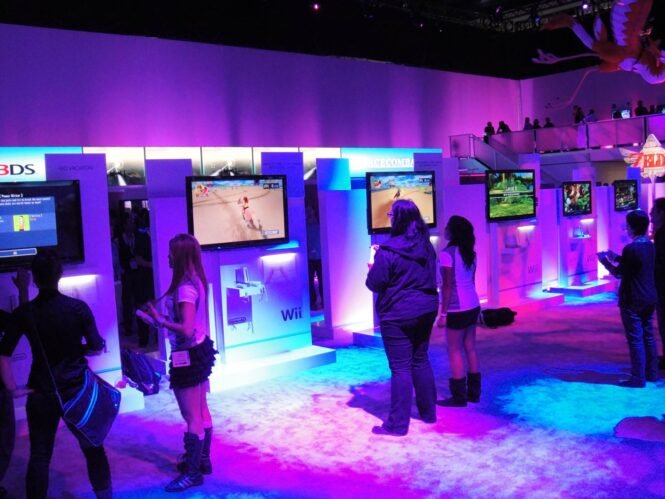
These sensory journeys are getting delightfully creative. Imagine a tech launch where the scent of pine needles fills the air during talks about environmental innovation or a marketing conference where soundproof pods offer meditation sessions between workshops.
Hands-on activities are becoming the heart of events, not just side attractions. Event organizers can turn this hunger into opportunities for connection, learning, and memory-making that no screen can replicate.
Start building next-generation events today
2025’s event scene is wild, exciting, and maybe a tiny bit intimidating. But here’s the thing: You don’t need to implement all ten trends at once. Start with what makes sense for your next event.
Maybe that’s using AI to create personalized attendee journeys or dipping your toes into the AR world with some pre-event teasers. Even something as simple as turning your regular networking session into a gamified experience can make a huge difference.
Pick one or two trends that align with your event goals and absolutely nail them. It’s better to do one thing brilliantly than ten things badly. Plus, your attendees will appreciate a well-executed experience over a smorgasbord of half-baked features.
And hey, if you’re worried about the tech side of things, don’t be. Today’s event platforms make it surprisingly easy to experiment with these trends without needing a PhD in computer science.
The future of events is already here, and it’s a lot more fun than we imagined. So go ahead, take that first step!
Looking for more event planning tips? Sign up for our newsletter!

Nathan
View author page


.jpg)